





Eye For Film >> Movies >> Goodbye Sisters (2025) Film Review


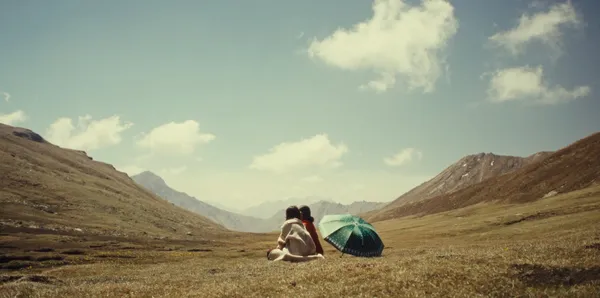

The inequalities and economic and social issues of modern day Nepal are explored through the prism of a single rural family in Alexander Murphy’s beautifully observed and shot debut feature, which shows the mountains climbed to make ends meet are not only physical. Sisters Jamuna, 21 and Anmuna, who is two years her junior, live in Kathmandu many miles from their remote home village of Maikot in the Himalayas.
Murphy follows them as they prepare to make the arduous trip back, gathering gifts but also embarking on negotiations regarding the yarsagumba – a prized type of fungus used in medicine that is difficult to find and highly valuable – which the sisters are returning to harvest. It’s evident that Jamuna has long been a rock for her younger sibling, which is why the prospect of an imminent move to Japan in search of a better economic situation that could help the whole family, is weighing heavily on both of them.

While the sisters are unguarded around the camera and often caught in close conversation, Murphy also knows when to hang back so that we get a picture of them in their environment, which emphasises the majesty of the Himalayas but which also captures a sense of their smallness against the world. After catching buses up into the mountains, the pair face an arduous walk, which we see them walking hand in hand through the rain and fog. The harsh beauty of the environment is shown with just as much care as the family’s more intimate moments, when incidental joys like blowing bubbles on wash day are allowed to fill the screen.
Murphy doesn’t have to offer commentary as by paying attention to the family’s conversations we’re able to learn what we need to know about both the past – which holds trauma surrounding their attempts to give Jamuna and Anmuna an education – and the present, which is becoming more precarious because of the scarcity of the yarsagumba.
Beyond the family circle, we are able to learn a lot about the curious fungus they are seeking, Latin name Cordyceps sinensis. It is also sometimes called “caterpillar fungus”, since it develops when a parasite grows within a caterpillar and, ultimately, mummifies it and grows further creating a sort of strange insect/plant hybrid about as long as a couple of matches. To find it, the family must make the dangerous trek from their home in Maikot, at about 2,370m to where it grows at about 5,000m above sea level.
There, a colourful camp has sprung up, where Murphy captures the almost fiesta-like atmosphere of games and community gatherings that break up the arduous days when people scour the hills in what amounts to the Himalayan equivalent of a four-leafed clover hunt. Murphy and editor Manon Falise carefully balance what we are shown, so we are able to see both the tight bonds that hold the family together and the wrenching circumstances that mean they are always on the brink of being pulled apart. Both her past experience and current circumstances make Jamuna’s determined optimism all the more remarkable and compelling.
“I want to walk on the red carpet,” one of the sisters says during one conversation. Hopefully the travels of this moving and illuminating film after its premiere at Tallinn Black Nights will see them get their wish.
Reviewed on: 13 Nov 2025


